Feature update: Share papers with your colleagues
We’re excited to start start the new year with a big Paperpile update, launching one of our most frequently requested features: sharing papers.
As with our other features, we thought carefully about the problem to find a solution that’s simple, powerful, and integrates naturally with your workflow. So we added a variety of functions that make it easy to share papers with your colleagues: Email papers directly from Paperpile, quickly share papers with anyone through a private link, collaborate on a shared folder with other Paperpile users, and share references with your co-authors while writing a paper in Google Docs.
Making friends with linked data
One thing that the Internet couldn’t live without is links. In fact, the Web is pretty much defined as a collection of links between virtual resources, and a fundamental part of good web citizenship is providing links to related pieces of content. Helpful, working links are vital to the health of the web.
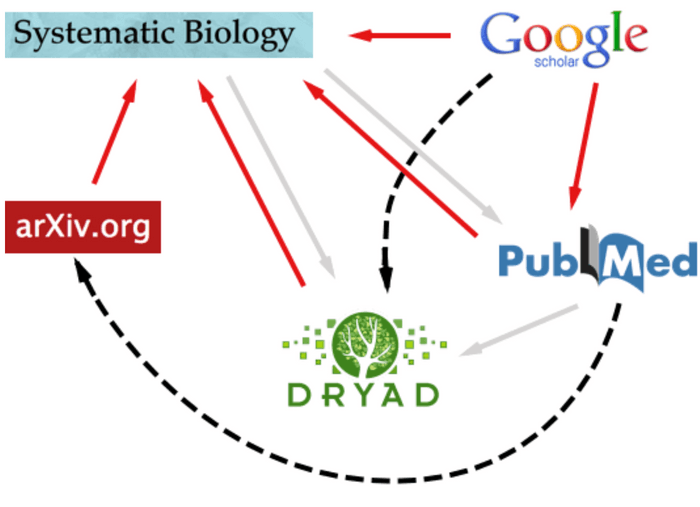
So it goes with papers. In today’s complex ecosystem of academic publishing, a single research project may yield several distinct web-based outputs: a preprint manuscript here, peer-reviewed paper here, and dataset over there. The ease with which an author can now disseminate her different research outputs is incredible. With sites like Arxiv, Figshare, Dryad and the nascent Peerage of Science, your data, figures, and manuscripts can live in many different places on the road toward publication.
However, a healthy Web doesn’t necessarily mean a healthy Web for scientists. If websites and search engines aren’t providing the links you need to effectively mine the literature, you’re stuck. Which is why for this post, we stepped into the world-wide web for research and asked whether our papers are getting the links that we, as authors and readers, deserve.
The beauty of scientific papers - Design trends of the past 350 years
Reading blogs about scientific publishing can be a sobering experience. Peer review is broken; publishers are evil; papers are evaluated by the wrong metrics; and the data is probably faked anyway.
The positive moments are too easily forgotten. For one, there is the initial relief when you first submit your paper. Suddenly, your vague ideas or unsolved problems from a year ago have materialized into something substantial, something worth communicating to the world. And of course, there’s the excitement when your paper finally gets accepted for publication.
But this post is about another, more subtle happy moment in the lifecycle of a paper: it’s that email you get, when the production team sends you a PDF and you first see your paper in its typeset form. This the final form with which your work will enter the scientific record. And, it’s beautiful!
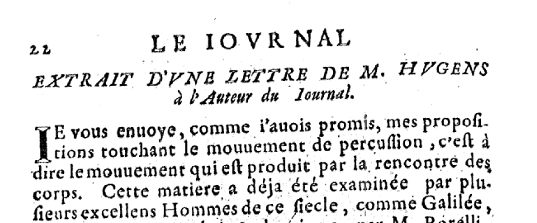
We believe that a scientific paper can be a thing of beauty in its own right. Which is why for our inaugural post, I opened the archives and took a closer look at the design trends and beautiful papers from the past 350 years.